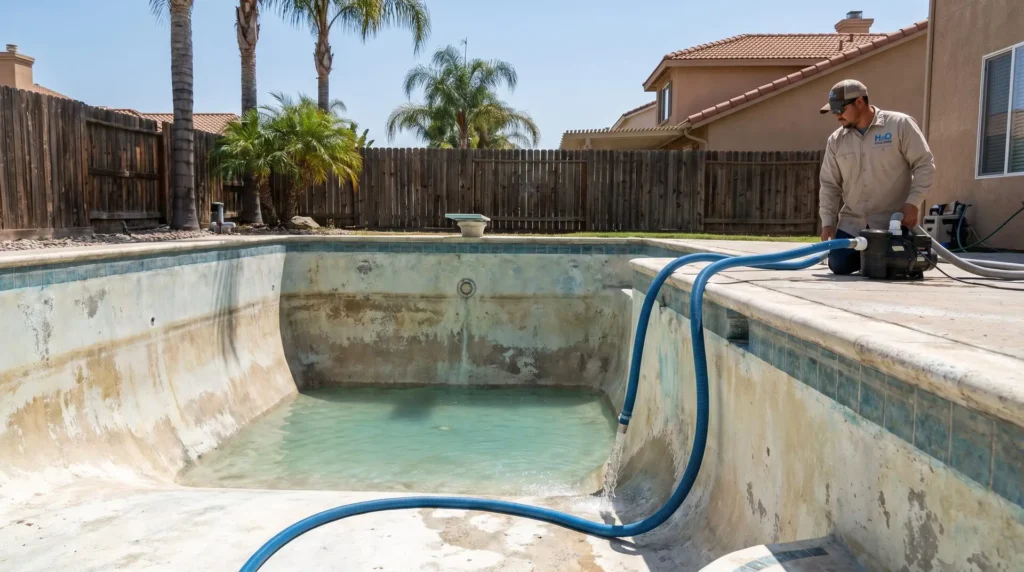
Pool plaster does not last forever. Over the years, water chemistry, sun and normal wear slowly break down the surface. Replastering restores a smooth, watertight finish, but it is a big project, so it helps to know the signs that it is really time.
1. The Surface Feels Rough
New plaster feels smooth. As it ages, the cement wears away and the surface turns sandpaper-like. Rough plaster can scrape feet and swimsuits and gives algae more places to hold on.
2. Stains That Will Not Brush Out
Some stains come from leaves, metals or algae and can be treated. Deep, set-in stains and blotchy color that remain after treatment are often a sign the surface itself has worn out.
3. Etching and Pitting
Water that is out of balance, especially low in calcium and alkalinity, slowly dissolves plaster and leaves small pits and a chalky look. This is common in areas with soft water if calcium is not managed.
4. Hollow Spots and Delamination
If you tap the plaster and hear a hollow sound, the layer may be separating from the shell. Delaminated areas can flake off and expose the layer underneath.
5. Flaking or Peeling
Pieces of plaster that come loose, especially on steps and benches, mean the surface is failing in that area.
6. Exposed Gray Spots
When the white plaster wears through, the darker base coat or shell shows through as gray patches. Once that happens, the surface no longer protects the shell well.
7. Cracks
Fine surface cracks (often called crazing) can be cosmetic, but wider cracks or cracks that keep growing should be checked to make sure the shell is not affected.
Repair or Replaster?
Small problems, like a single chip on a step, can sometimes be patched. When several of the signs above appear across the pool, patching usually does not last and a full replaster is the better investment. A pool professional can look at the surface and tell you which option makes sense.
How Long Does Plaster Usually Last?
Standard white plaster often lasts around 10 years or more, while quartz and pebble finishes usually last longer. How long yours lasts depends a lot on water balance, so keeping chemistry in range after replastering makes a big difference.
What Replastering Involves
The pool is drained, the old surface is prepared or removed, repairs are made, the new finish is applied and the pool is refilled. The new plaster then needs careful chemistry and brushing during its first weeks. You can read more on our pool replastering page.
Frequently Asked Questions
How often does a pool need to be replastered?
Many pools need replastering every 10 to 20 years, depending on the finish and how well the water chemistry is maintained.
Can I just acid wash instead of replastering?
An acid wash can remove some stains, but it also removes a thin layer of plaster. It does not fix rough, delaminated or worn-through plaster.
How long does a replaster take?
Most replastering projects take about a week from draining to refilling, plus a startup period with daily care.
Need a Hand With Your Pool?
H2O Pool Care is a licensed, family-owned pool service serving Sacramento and Placer counties since 2017. We replaster pools with plaster, quartz and pebble finishes and can tell you whether your surface needs it. Call (916) 335-3559 or request a free quote.


