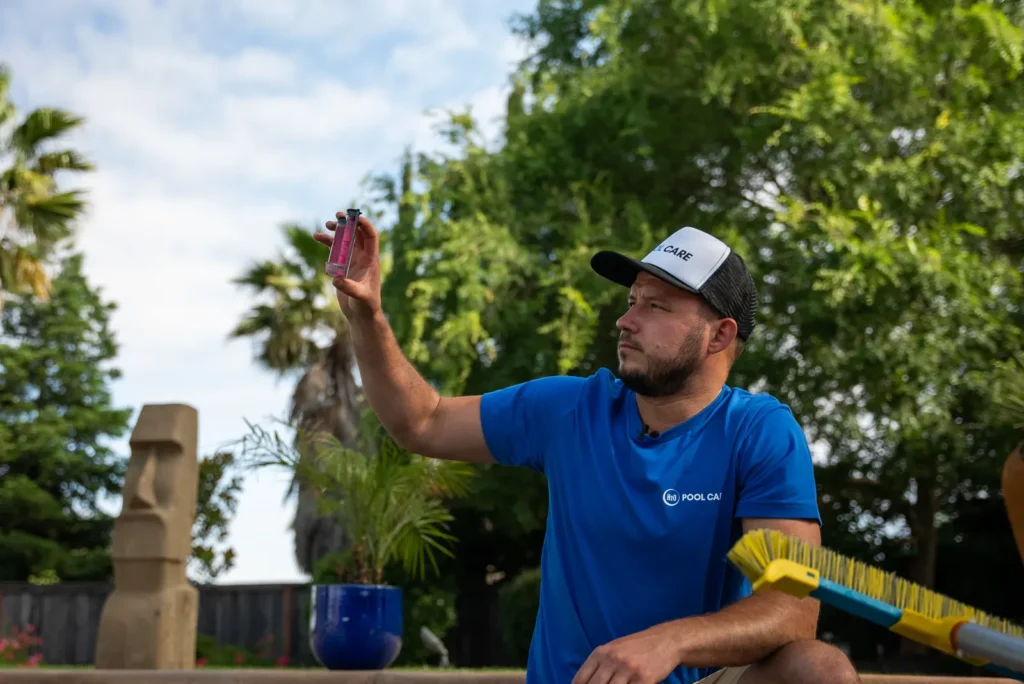
Balanced water is the foundation of a clean, comfortable pool. You do not need to be a chemist, but it helps to know the main readings and the ranges most pool professionals aim for.
The Key Readings at a Glance
- Free chlorine: about 1-3 ppm for most pools (higher in salt pools and pools with high stabilizer)
- pH: 7.4-7.6 is ideal; 7.2-7.8 is acceptable
- Total alkalinity: about 80-120 ppm
- Calcium hardness: about 200-400 ppm for plaster pools
- Cyanuric acid (stabilizer): about 30-50 ppm for chlorine pools, often 60-80 ppm for salt pools
- Salt: follow your salt cell maker’s range, commonly around 2,700-3,400 ppm
Your equipment manufacturer or pool professional may recommend slightly different targets for your pool, especially for salt systems and new plaster.
What Each Reading Does
Free chlorine
This is the sanitizer that kills bacteria and algae. If it drops near zero, algae can start growing within a day in warm weather.
pH
pH controls how well chlorine works and how comfortable the water feels. High pH makes chlorine weak and can cause scale; low pH can sting eyes and corrode metal and plaster.
Total alkalinity
Alkalinity acts as a buffer that keeps pH from jumping around. Too low and pH swings; too high and pH keeps drifting up.
Calcium hardness
Plaster is made with calcium. Water that is too soft tries to pull calcium out of the plaster, causing etching. Water that is too hard can leave white scale on tile and inside equipment.
Stabilizer
Cyanuric acid protects chlorine from the sun. Without it, much of your chlorine can disappear in an afternoon. Too much of it makes chlorine slow to act.
How Often to Test
Test chlorine and pH at least once or twice a week, and more often in summer heat. Alkalinity, calcium and stabilizer change more slowly; checking them every few weeks is usually enough. Our pool care blog covers each reading in more detail.
Why Balance Matters in the Sacramento Area
Water supplies around Sacramento range from soft river and lake water to harder well water. Soft water can be aggressive to plaster, while hard water tends to leave scale. Knowing your fill water helps you set the right calcium and alkalinity targets.
Frequently Asked Questions
What is the most important pool chemical level?
Free chlorine and pH matter most day to day. Chlorine keeps the water sanitary, and pH decides how well that chlorine works.
Is 0 chlorine in a pool dangerous?
With no chlorine, bacteria and algae can grow quickly. Avoid swimming until chlorine is back in range.
Why does my pH keep going up?
High alkalinity, salt systems, new plaster and lots of aeration from waterfalls or spillways all push pH upward.
Need a Hand With Your Pool?
H2O Pool Care is a family-owned pool service serving Sacramento and Placer counties since 2017. Our technicians test and balance your water on every weekly visit. Call (916) 335-3559 or request a free quote.


